Pages

Saturday, March 18, 2017

a recommendation


hi there,

throughout my research so far, i wanted to share Jessica MacCormack's book that we have at the farr. at the end of my residency, i'll be putting together a small book of my findings and research, providing a little bibliography of works at the library that are relevant to the topic of depression in contemporary art.
The See its on the residency project shelf, easy to find:


see ya,
maia

Sunday, March 12, 2017

the farr winter residency


hi there, 

i’m really excited to be the winter resident at the fine arts reading room. i kind of don’t believe it, but its real enough that i’ve been working on it a bunch. here is an idea of what i’m planning to work on. it’s the paragraph that got me here in the first place:

Over the past few semesters, all of my projects have followed a similar line of inquiry. It has to do with contemporary art and depression, with being a depressed person that makes art. It raises questions about the communicative nature of artworks, and the assumption that they are these powerful vessels for expression and for aesthetic communication. I’ve been wondering what happens when an artwork doesn’t solicit an interpretation, but instead makes the viewer weary. What kind of value does art have if it presents and produces the disengagement felt when depressed? When the relational property of art is exhausted, what kind of aesthetic remains? If the image can’t be seen or interpreted, what’s its function? This distance, this break of connection so often felt in a depressed state, and its properties in art, all of this has been the questions I go back to.

The prevalent scientific notions present depression as a hindrance to creativity, but I don’t think that they are necessarily incompatible. On the other hand, I see no value at all in furthering the antiquated notion of melancholy and the artistic genius, so I will stay very far away from all of that. Rather, I want to research about art that embodies depression, art where depression’s symptoms are present in its very constitution. Art that is depressed, not art that presents depression as a theme, not art that exemplifies depression.

I know I can’t be alone, that there are other depressed people that make art in the world and that their art can embody depression. I want to find it, and I want to know what value it has in current art world principles. I want to find more sources and critical essays on the subjects of depression in contemporary art, and in the end present a concise booklet of my findings.

Over the course of the residency, I want to utilize the exhibition space to showcase some of those works. Providing the context under which they are chosen and exhibited will be of importance, so I think small write-ups and text excerpts should be present and informative. Throughout the six week timeline, the exhibited works will build on each other along with the research, providing more artworks to be seen (physically if available, in images otherwise), and critical considerations to be reflected upon. This exposure of depressed artworks is important as to raise awareness and understanding of individual and collective experiences of depression. More importantly, I think it necessary to reconcile creativity with traditional psychiatric assessments of the depressive state.

so, yeah. it’s a little bit of a messy topic, and it intersects with so many other areas of study. it feels like a huge undertaking and such an important subject, i don’t want to mess up. if you are aware of any critical research/writings/artworks on the subject, or if you are an artist living with depression currently or in the past, i invite you to reach out to me if you’d like. i know it’s terrifying, i was terrified to propose this subject, as it discloses my mental health to strangers. but i think that’s a really important part of it (if you don’t feel like it, you can talk to me anonymously too). also, if you feel i am glossing over an important aspect of the realm of contemporary art and depression, or mental health in general, do please let me know and i will acknowledge all i have missed in the aim to be as inclusive as possible.
thank you to paige and everyone at the farr for granting me this opportunity.

sincerely,
maia c. donnelly

(maia@maiadonnelly.com)

ps: my first shelf install is up at the farr, i encourage you to swing by to see and have a better idea of what i'm working on 


Friday, April 15, 2016

The final blog

It’s over.


Sort of.


    Today I’m going to pick up my installation. This semester, this residency, it was a lot to take on. I chose a topic that was so much bigger than a 6 week residency, and I’m happy I did. I’m not done researching, this won’t be the last Glitch in the System zine, or my last project related to marginalized people in the arts. I learned a lot about myself, I learned a lot about how other people share similar views and experiences that I do, and a lot of people have it a lot harder than I do. Most of my research related back to myself this time, if I were to do it again, I would have gotten the chance to explore more about BIPOC*, I wanted to be able to interview and accept submissions from BIPOC in the arts. I didn’t speak on BIPOC in the arts because I’m white, I don’t want to speak over anyone, I would rather give a voice to BIPOC, but I didn’t organize my projects fast enough to allow for this. My next zine, will definitely include this.
    I think as I wrap up this residency it’s important to mention things we CAN do to be inclusive in the arts community. Physical accessibility is extremely important, hosting events at venues that are accessible is a really big deal. There are websites in Montreal that are devoted to this like “Is this venue accessible” (http://itvaccessible.com/city/montreal/) This website could use an update (and they invite people to email updates), but it’s an awesome place to start. My summer project will be to compile a list of accessible spaces in Montreal to release as a free source for promotors and people in the arts. Another really important thing is to enact safer spaces initiatives, which Montreal is actually really great for! I’m going to include a **safer spaces initiative to read over at the bottom of this page, Montreal is amazing for having these initiatives for music based shows, I’d like to see these initiatives carried over into the art world. Education needs to be accessible, university isn’t, and it probably won’t be for a long time, it will always be a struggle to try and fit into the rigid box that is post-secondary, but there are a bunch of ways for decentralized learning and educating can happen. QPIRG Concordia (Quebec Public Interest Research Group at Concordia) is a huge resource, it’s wheelchair accessible, safer space initiative is enforced, and its available to non-students (community members). Alternative Libraries is also an incredible resource for alternative knowledge. http://www.alternativelibraries.org/.
    If you are a student at Concordia, the Accessibility Centre is an great resource, they hold workshops for exam and essay writing, how to overcome common problems for people with disabilities, tools for studying, and they also give access to tutors, pdf textbooks, note takers etc.
And lastly, the Fine Arts Reading Room, which was a place of solace for me this semester any time I needed to research, use a scanner or a computer, or even just sit on the couch and read a zine, they are a student run library, that has a bunch of awesome resources (including the incredibly knowledgeable staff), tons of art/gender/queer/contemporary related texts, a zine library, a small cozy atmosphere, and there's plants in there… which is more important than you think. After staring at computer screens my entire life, its so nice to read a zine by the window with some plants.
    We need to remember how important it is to give voices to people who wouldn’t otherwise have the chance to speak. Marginalized people are often looked over for multiple reasons, and talked for by people that don’t fully understand the experience, and therefore don’t have the right to speak on it. Give voices to those who aren’t normally heard. Put women in your art shows, put BIPOC in your art shows, put disabled people in your art shows, put students in your art shows. Representation is extremely important.
I want to thank everyone who’s read my posts, came to see my installation in the FARR, saw my website, provided me with resources, assistance, and support. Thank you to the Fine Arts Reading Room for absolutely everything.


- Heather Ross


*BIPOC = Black, Indigenous, and People of Colour.

**Safer Spaces Initiatives
http://safespacenetwork.tumblr.com/Safespace does a good job at explaining safer spaces
“A Safe Space is a place where anyone can relax and be able to fully express, without fear of being made to feel uncomfortable, unwelcome, or unsafe on account of biological sex, race/ethnicity, sexual orientation, gender identity or expression, cultural background, religious affiliation, age, or physical or mental ability.
A place where the rules guard each person’s self-respect and dignity and strongly encourage everyone to respect others.”

This means, no oppressive language or acts will be tolerated.
Often safe spaces are scent free (I’m one of the people that really appreciates this)
Listing the accessibility of the space, i.e., size of the door, amount of steps into the space and in the space, if there are ramps or a separate accessible door etc.
A safe space event is usually all ages, and drug/alcohol free, I understand often art shows have bars or wine, but it’s important to remind the people in attendance to be respectful, and to list on the event whether it will be alcohol free or not.
Listing on the event if there will be food, and if any of it is vegan/non-dairy/nut-free/gluten free etc.
Many events like book fairs or talks offer first come first serve bus tickets for people in need to get home safely.
And making sure the people attending the even understand that certain behaviours will not be tolerated and if people break the guidelines they could potentially be removed from the event.


The final installation in the FARR


Mid-residency installation photo 


glitch in the system zine, available on heathrr.ca in pdf/audio and in the FARR in print.


Tuesday, April 5, 2016

another update

I added a few things to my website today from the zine that I'm releasing on Friday. Plus a couple links to resources and art.

heathrr.ca

here's a thing i wrote about the fact residencies are really hard.

"i want to talk about failure.

the idea of success and failure within the arts really bums me out. but how do we pay artists, train artists, curate artists, if theres no goodbadpassfailrightwrongetc.
i set out on this residency to learn about how disabled and marginalized people make art, document art, research, write, and just the research itself was difficult. tiring.
i’ve written half essays and letters about 100 times but not finishing, i’m careful about my words, so now i’m trying not to be.
digital space is accessible in the sense that you can write anything and read anything as long as you’re capable of doing those things, and have access to the internet.
and zines are accessible in the same way, if you can write about it, and if you have the ability to print and distribute, than you can do it.
so i want to do this and i want to do this write, and make my information accessible, or as accessible as i can.
the problem is that i’m a disabled person myself, and research is tiring. responsibility is terrifying. long term commitments are daunting.
and education is inaccessible at best.
and so my residency didn’t go quite as planned, these are the struggles i’m facing, and i’m starting to realize that this is probably exactly how it should have gone.
my failures are just proof that being a disabled artist is hard. being a disabled student is hard. trying to access these things and do things like residencies, to complete the promises i’ve made.
when art mimics life u kno?
like every project and thing in my life, i’m playing catch up, and getting over my fears, and writing them down instead.
i’m pretty sure thats how you make art, and i’m pretty sure thats how you make zines.
through research i’ve learned that a lot of disabled and marginalized people are absolutely killing it despite the difficulties we all face in our own respects
through research i’ve learned that we’re all struggling different struggles, but in the end we’re all struggling.
my research about struggle has been a struggle.

i knew this would all end in a weird ironic loop."

Saturday, March 26, 2016

Extended Residency

This project was bigger than I knew.


I've been compiling information, and struggling with finding the time to upload it. It seems like any time I sit down to write in this blog, I remember that I have some other homework to do, some other project to work on.

My residency has been extended until April 15th. I think it's fitting given the fact I'm researching accessibility in the arts. It's something I will always have trouble accepting but, I do need more time than most, to get to the same point. I need assistance, I need understanding, I need support. I'm lucky, that the reading room has been really accommodating and has let me take a bit more time.

So while I was researching disabled people in the arts, art centered around disability, accessible ways to record research and put the information out there, I realized that... I have to put my own info out there in an accessible way as well. So I started researching people that have put out zines and art in different ways.

Content Warning: Child Sexual Abuse: This is a zine that was turned into a video for people that have issues reading.


Resonance Audio Distro has an awesome collection of audio zines

This zine was made by visually impaired teens.

Sarah Tea Rex has put all of their zines in pdf format on this site, and the get a grip zine is also available in braille.

An article about Roy Nachums braille paintings for the blind.

A free braille converter for 3d printing.

3D printed braille and picture books for blind children.

A free braille slate file to 3D print.

Ivona is a text to speech site that lets you pick voices in any language, including French Canadian.


More info on the way!

Heather

Monday, March 21, 2016

website updates

!!!

Hi.


I've been updating heathrr.ca all day because I've been slacking.  I'm guessing, that everyone else is as swamped by finals, but if you find the time go check out some of the updates.

I did a review of DEFINITELYREALALLTIMETRUETALES@LOYOLACAMPUS.COM which was a performance that happened in Feb at Loyola campus, that I helped out on... so it's a biased review, but a review anyways.

Slowly but surely, I'm compiling a zine of all the research I've done in regards to accessibility, and I'm going to be putting it out in PDF, Audiozine and paper format.

I'll update again tomorrow.

- Heathrr

Monday, March 7, 2016

Update

The website is aliiiive.

heathrr.ca

Go there to check up on what I'm doing in a more visual and less written sense. Also, the icons are all draggable so, drag em around.

I've also been keeping a book list;

-Lists: To-dos, Illustrated Inventories, Collected Thoughts, and Other Artists
-Figurations of Violence and Belonging: Queerness, Migranthood and Nationalism in Cyberspace and Beyond
-Conversation pieces: Community and Communications in Modern Art
-Being on line, net subjectivity
-The uncanny: Experiments in Cyborg Culture


I'm posting art by inspiring artists that (i think) deserve representation. 


And I just added a few things to my workspace installation in the FARR.


Heather

Monday, February 29, 2016

Hey, I'm Heather

Okay, now for the intro.

Hey, I’m Heather Ross, and I’m the newest resident of the Fine Arts Reading Room. I’m starting off a little bit later than I should have due to an injury, but as it stands, I have 4 weeks left in my residency.
I’ll be setting up a website this week and linking it to this blog, throughout the residency I’ll be compiling a zine, and I also have an installation in the FARR which will change and grow every day I’m here.

About my project

I’m researching something really broad, I want to learn and talk about accessibility in artist and research spaces, and how technology has affected that. I’m focusing on marginalized* groups, and how they access information differently because of technological growth in all formats. I’m focusing on everything from 3D printing paintings for the blind, to how education is accessed, to how research is done by a person with a disability (hello, thats me, I am one of the people with a disability, I'll get into that another time), to people in wheelchairs who gather on second life just to fly. I will be documenting my findings in multiple different ways, whatever feels right, whatever way is relevant.

If you do get the chance to check out my installation in the FARR, you’ll notice it’s pink, girly, child-like. I myself work with electronics on a regular basis, and have felt like I’ve needed to hold back femininity in my work to be taken seriously. I’m over it. I also have felt influenced by the DIY nature of cyber/net art, and the idea that art can be not only playful, but personal. A computer can be an extension of self, in the same sense, I believe a work space can show personality and tell a story. In Jon Rafmans paintings “You Are Standing in an Open Field”, he shows a series of messy desks, just by looking at each one you can tell what type of person it belongs to. I love that. I love that no matter how sterile technology looks, there are millions of cases, covers, stickers, wallpapers, keyboards, customization tools. You give a person something, and they’ve gotta make it their own.

I hope you enjoy following my process

- Heather


*Marginalization is social disadvantage and relegation to the fringe of society. It is used across disciplines including education, sociology, psychology, politics and economics.

3D Printed Paintings

Hey!

I’ve rewritten this intro blog post nearly 20 times, each time I give this long explanation of who I am and why that matters and blah blah blah but I will do that another time becaaaaaause,

I have a friend doing some seriously amazing stuff and I kind of get to be the first to talk about it.

About a year ago, my friend Nathan bought himself a 3d printer, and I was thrilled because at the time that was exactly what I needed. I had the file to print, I had the black glitter filament ready to go, I just needed to find someone to help me finish and so he and I started on our overnight journey to finishing the case for my midi controller, it took way too many tries, and it ended up a little iffy, but I love that midi controller like my kid, and I have him to thank for it.

Nathan Lefsrud been working with High School students in a fine arts class to 3D print classical paintings for the blind. Inspired by this article (http://www.iflscience.com/technology/3d-printing-brings-paintings-and-photography-blind-people), Nathan is working to integrate 3D printing into the high school art curriculum in Alberta. In this example, he used Blender to layer and texture the different components of Ludolf Backhuysen's "The Coming Squall." 


You can find more info about this project and more of Nathans work on his teaching blog, https://2teacher4u.wordpress.com/high-school-fa-3d-classic-paintings/ and on thingiverse http://www.thingiverse.com/thing:1378056


- Heather

Sunday, November 1, 2015

The Dawn of Collage!

       There are a few factors that must be present for collage to exist sustainably. First of all, there's got to be paper. Vellum can hold a lot of gold leaf and gems, but we'll consider that a type of assemblage, since collage is really about thin, layered sheets of plant fibre. Secondly, there's got to be a lot of paper lying around. It can't be too precious or no one could bear to chop it up. Finally, collage needs an elaborate system of visual sign-language that it can absorb and respond to. Just like any art, collage thrives in the cracks of complex social structures, especially the nooks and crannies of luxury and leisure, since it technically does destroy other resources in order to exist. 

One of the problems with tracing collage history back to its birth is that paper decays pretty quickly compared to other media. So I can't show you the Chinese collages that appeared around the same time as paper itself(~200BC). The oldest thing I've found is some really lovely 10th century Japanese chigiri-e

During the Heian period, Japanese manuscripts started to include chigiri-e, a torn-paper overlay method. The most famous example is are the heavily decorated manuscripts of the works of the 36 Immortals of Poetry. Here are some examples from the Nishi-Honganji collection: 


from the 1st volume of collected poems of Ōnakatomi no Yoshinobu (921–991), Artist Unknown

two pages of the collected poems of Minamoto no Shigeyuki (?-ACE 1000), Artist Unknown

a page from 1st volume of collected poems of Lady Ise (10th century), Artist Unknown

Eventually manuscript decoration moved towards painted scrolls, and chigiri-e became less common, but it is still practiced  today. 

Next week, we'll be jumping all the way to the Victorian era. While there are many cultures who meet my 3 collage criteria in the intervening period, the records are scattered or have decayed.  If I find anything I haven't found before I'll post about it here. 

Update: Found some Persian Court pages style from ~1500 where panels are mounted on a patterned "album page". Close 2 collage but not quite... I'll keep checking it out! 

See you @ the club!

Paige

Fruits of the Farr This Week

Hi All! Just thought I'd share some cool things I found at the FARR this week! Enjoy! 

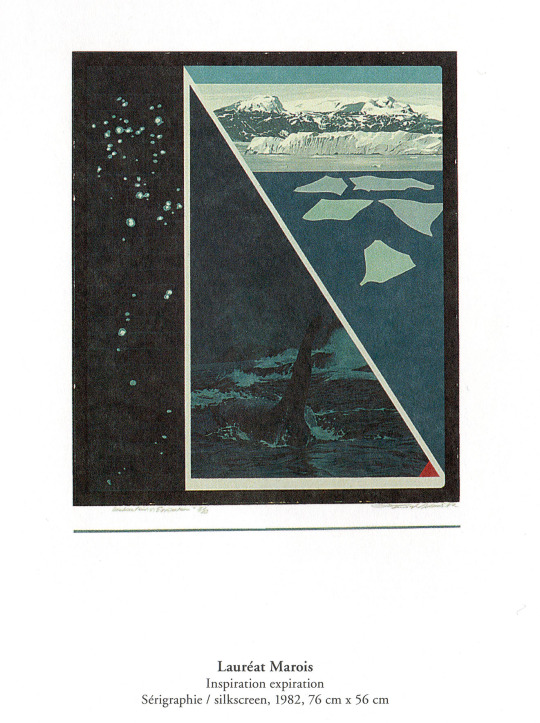
Laureat Malois in Code of ethics for original printmaking (2000)


from Rachel Whiteread

maquette by S.J. Witkiewicz from 13th International Biennial of Tapestry, 1987


from Henri Matise: A Retrospective, 1951

I'll keep posting all the cool collage work I find! I've only gone through one shelf so far...


Monday, October 26, 2015

Hi, everyone! 

I am the FARR fall resident! My name is Paige.  

The next six weeks at FARR are all about collage. Every week on Monday I will write a little about the medium's history on here, and every Friday, Collage Club will make something totally new out of the FARR archive. I'm really excited to see what we come up with every Friday 6-9 at FARR! (The "we" I'm talking about would ideally include you and all your friends) 

Anyways, on to the blog post content. This is just an introduction, so no facts 2day. This week is all about starting points. What's the state of my collages, your collages, FARR's collages right now? 

FARR has some great collage work in their zine section, here are some examples for u to look at:

from MAD zine (N7433.7L86 2012)

from Anothernet  by Jeremy Dabrowski  (N 7433.7 D33 2011) 

Etter Patui zine ( NC143. B877 2007)

New Civilizations: A Book of Collages by Chris Foster (N 7433.7 F678 2011)


As for my collages, I recently figured out where to buy National Geographics in Montreal (churches and their garage sales) so I'm set, just cutting stuff up, getting ready for you all to come to Collage Club on the 30th. Here is a Club Materials preview: 


Here are some of my collages from an ongoing snake-related project so you get a sense of what I'm all about:


I'm so excited to be FARR's resident and make something really cool with all of you, and the archive! Thanks for reading, watch this space for next week's post about early collage history! Also check out the tumblr I made to for the club, I'll be posting collage works every day from all corners of the internet! 

- Paige 


Tuesday, April 21, 2015

Plant Sounds Pt. V

PROJECT 
__________________________________________
Plant Sounds Pt.V


thank you <3
 

Sunday, April 19, 2015

Plant Sounds Pt. IV

PROJECT 
__________________________________________
Plant Sounds Pt. IV

me and the plant-plant and the circuit
 
The project was a success. Though now that everything is operational (more or less) there's a ton of potential for future research. One thing that is apparent is the rate of change within the plant. It functions on a different time scale, one that is much longer and more difficult to perceive without the use of these instruments. It is too young in the project to say conclusively what exactly is going on and which variables (humidity, light, temperature, etc.) make the most significant changes within the plant. Isolating the variables and plotting the data will help narrow the speculation. Also, this project has been fixated on a single peace lily. Experimenting with other species would provide some interesting reaffirming or contrasting data. 
 
The circuit could be optimized and augmented with higher precision. The addition of a higher bit-depth ADC and perhaps a FFT integrated chip would also refine the incoming signal. On the creative end of things, adding capacitance measurements to the circuit would make the plant much more interactive — basically turning the plant into a theremin. That bit has been done before, but the addition of a theremin-style interactivity to the existing circuit would make it unique.
 
All in all, the project has been enlightening and a worthwhile experience. Thanks to those who came and experienced the sounds of flora! It was great to share.


SPECIAL THANKS

Marc-Alexandre Chan
Fine Arts Reading Room
Eldad Tsabary 
Ooleepeeka Eegeesiak 
IEEE Concordia Student Branch
James Bourque

Wednesday, April 15, 2015

FARR presents: PLANT SOUNDS

this is tomorrow! come join us 
<3 farr="">

Thursday, April 9, 2015

Plant Sounds Pt. III

PROJECT 
__________________________________________
Plant Sounds Pt. III

Plant Sensor Prototype Mk. III

IT WORKS ! ! ! THE CIRCUIT WORKS ! ! !  IT WORKS ! ! ! THE CIRCUIT WORKS ! ! ! IT WORKS ! ! ! THE CIRCUIT WORKS ! ! ! IT WORKS ! ! ! THE CIRCUIT WORKS ! ! ! IT WORKS ! ! ! THE CIRCUIT WORKS ! ! ! IT WORKS ! ! ! THE CIRCUIT WORKS ! ! ! IT WORKS ! ! ! THE CIRCUIT WORKS ! ! ! IT WORKS ! ! ! THE CIRCUIT WORKS ! ! ! IT WORKS ! ! ! THE CIRCUIT WORKS ! ! ! IT WORKS ! ! ! THE CIRCUIT WORKS ! ! ! IT WORKS ! ! ! THE CIRCUIT WORKS ! ! ! IT WORKS ! ! ! THE CIRCUIT WORKS ! ! ! IT WORKS ! ! ! THE CIRCUIT WORKS ! ! ! IT WORKS ! ! ! THE CIRCUIT WORKS ! ! ! IT WORKS ! ! ! THE CIRCUIT WORKS ! ! !  IT WORKS ! ! ! THE CIRCUIT WORKS ! ! !  IT WORKS ! ! ! THE CIRCUIT WORKS ! ! !  IT WORKS ! ! !  THE CIRCUIT WORKS ! ! !  IT WORKS ! ! !  THE CIRCUIT WORKS ! ! !  IT WORKS ! ! ! THE CIRCUIT WORKS ! ! !


Marc touching the plant — SCIENCE
After acquiring two exorbitantly priced Silver/Silver Chloride (Ag/AgCl) electrodes, remapping and overhauling the schematic (twice and then some), and being told several hundred times the theory behind a Wheatstone bridge (much to Marc's enjoyment), the circuit actually works as planned. Now, it may not be perfect and requires regular tweaking, but it works. Marc and I shared a celebratory high-five while the stress of our previous defeats washed away.

There is still a sizable amount of 60 Hz EMI plaguing the signal. For the time being, a simple attenuation of 60 Hz within Max/MSP will be sufficient. In the future, some refinement of the circuit design may help to prevent the interference. 

! ! ! In any case, I really dislike 60 Hz now. From this point on, my music will never use A♯1/B♭1 ! ! !

Now the final steps of the project are underway. The signal's qualities and characteristics need to be collected and delivered to Max/MSP. In order to do this, we are using an Arduino interface to translate the signal into serial data — an analog to serial bridge. Using Arduino is a new experience for me, but thankfully Marc is hip with it's language. The output of the Arduino will be decimal intergers as strings (10-bit values, 0 to 1023). I also still have to transfer the circuit to my own protoboard and solder it all together. Big thanks to the IEEE for letting me use their breadboard (and wire, solder, expertise).

Arduino code snippet
Max/MSP is capable of interpreting serial data live.  In this way, I'll have real-time values and, in effect, real-time audible changes in the sonic outcome. I've never dealt with serial data before, so there is some learning and testing in order to cultivate something representative and clear. Though with a series of numbers being fed into Max/MSP there is a great deal of potential for automating parameters (delay times, frequencies, filter values, and on and on). For the purposes of the project, too much ornamentation of the audio signal is, I feel, in poor taste. The peace lily probably doesn't know how to play music or modulate frequencies or control reverb times or create sick-ass beats, after all. Further research on this will tell.

The project has evolved with each stage, and it's much different from where it originally stemmed. Little did I know how massive of an undertaking this project would be. It all begins with a question: "Can a plant make a sound?"
 

The short answer is "yes". 

Lots of Love,
Thom

(soon to come are audio examples and the actual installation)

Saturday, March 28, 2015

"This Is Just One Voice" Performed March 27th 2015 at Studio 7

After many days of programming and practicing (+50 hours all together), I designed and learned to play a new instrument in Max/MSP. Its debut performance took place on March 27th 2015 at Studio 7. Thank you to all who came out to the performance. In this post, I will share the recording of the performance, and discuss the design of the instrument.

First of all, here is the performance:


The instrument's design is relatively straightforward from a macroscopic perspective. My voice is taken into the computer through a microphone where it is processed by three main sections before being distributed to four speakers which surround the audience.


The first stage, labelled "Live Recording and Loop Playback" is an Ableton Live set controlled by a grid controller. At this stage I am able to record loops such as the opening "this is just one voice", the singing in the middle, and the final "I invited people to abuse my gravity". This is the only processor using premade software; when I started the project, I imagined that I would be recording and rearranging words and sentences on the fly to make new poetry from one recorded original. As I started practicing with the instrument, however, I realized that this was fairly uninspiring; simply speaking the derived poem would have the same semantic content, with the additional prosody of my voice, and it was nightmarishly difficult to keep track of which word was associated with which button on my grid controller. Ultimately, I think the performance was improved by my decision not to extensively use this stage of the instrument.

The second stage is labelled "Frequency Shifted Delay with Feedback". This processor has a very dynamic gestural sound, and adds an inharmonic electronic quality to my voice. It's controlled by a QuNexus keyboard device which sends three streams of data to the computer based on which note I press, how much pressure I am applying to each note, and the position of my finger on the key. By varying the way I touch the key, I can elicit sharp attacks or steady drones from this stage. As with all stages of the instrument however, it doesn't make any sound unless I speak/sing into it from the microphone.

The third stage is the granular delay. This complex processor chops the incoming stream of vocal sounds from the microphone into tiny fragments, called grains, each of which has slightly different properties which are stochastically generated from within ranges set on my tablet computer. I used this processor in the performance to generate a variety of textures from my voice. The sound of the line "when many voices speak at once" near the beginning of the performance is a typical granular sound effect. One of the parameters of each grain is which speaker to play from; with four speakers to choose from, the output of the granular delay really enveloped the audience, who sat in the middle of the four speakers.


Finally, stages two and three form a feedback loop, each one feeding into the other by an amount set on my tablet computer. I didn't use this feature of my instrument much in the performance, but it offers some interesting possibilities to iteratively process the sound of one processor using the other.


The first performance with this instrument was a success, and I look forward to continuing its development. Both of the processors have room for improvement without changing their function considerably, and as well there is the possibility to add additional processors in the future. Programming aside, I have a lot of room to hone my playing technique with this instrument. I hope to also use it in collaboration with other vocalists and poets, and potentially also with instrumentalists and other laptop musicians. While I developed the instrument intending to use it with my own voice, its design is such that it could operate with any audio signal, be it a mic'd acoustic source, or any other electronic source.

Thank you to Thomas Christie for sharing the March blog with me, thank you to Studio 7 welcoming me into such a great performance space, and thank you so much to the FARR for the opportunity to work on this project and document it on this blog. It has been a joy to discover Max/MSP during this project, which I was only able to afford thanks to the residency honorarium. As well, it was fascinating to interact with the Reading Room users to develop the poetry, which was one of the most important aspects of the performance at Studio 7. I couldn't have accomplished any of this without the Reading Room.

My gratitude,

Travis West

Thursday, March 26, 2015

Plant Sounds Pt. II


PROJECT 
__________________________________________
Plant Sounds Pt. II


60 Hz and a little something extra
 
Interfacing with the plant is proving to be more difficult than anticipated. While the current prototype was picking up some kind of signal, there was a considerable amount of 60 Hz interference. This is because the plant virtually acts as antennae. There was a small, irregular signal overlaid the 60 Hz, but we couldn't conclude if it was noise interference or the plant. Nicely enough, interacting with the plant did cause reactions in the collected signal, mostly in the form of amplitude variation. Although these tests weren't a complete victory, it did bring to light some potential fixes.

60 Hz PROBLEM
To rectify the issue of 60 Hz interference, we may go with an instrumentation amplifier. A Faraday cage would be ideal to isolate the electronics and the plant, but then the installation would just be a box. It just wouldn't be the same.

ELECTRODE PROBLEM 
The electrodes we are currently using are copper-based and super ghetto (soldered by yours truly). Switching to silver-chloride electrodes may prove to be prosperous — as almost all biological electrode systems use Ag/AgCl electrodes (oops... my bad). Ideally, I would have micro-electrodes capable of measuring intracellular ionization. 

PLAN B
Wheatstone Bridge
We have started to develop the alternative circuit that would measure micro-voltages with a different approach. The new method detects a micro-voltage across a varying resistance of the organism within a Wheatstone bridge. The data will be collected and output through Arduino code. Max/MSP (the software being used for the soundscape) has the capacity to read, format, and interpret the serial data. In this way, it will be a mixture of 'audification' and 'sonification'. Charles Dodge is well known for working in this style (see attached video). 

Today we will finalize the schematic and decide on the required electronics. There may be some difficulty augmenting the existing circuit with the Wheatstone bridge, but Marc is a bona fide champion in this regard. ONWARDS & UPWARDS!


Charles Dodge — Earth's Magnetic Field (1970)


Lots of Love,
Thom

(more info on sonification)

Friday, March 13, 2015

Plant Sounds

PROJECT 
__________________________________________
Plant Sounds


The plant kingdom is, at first glance, one of silence, where these stationary beings seem static and uneventful. Internally, however, plants are rampant with activity. Their molecular factories turning water, light, CO2, minerals, and so on, into the air we breathe, the nourishment we eat, the medicines we need, and the energy we burn and thrive off of. Our dependency upon these microscopic factories is clear. But rarely do we contemplate a plant's capability to sense and react, and even less so do we consider them capable of generating electrical signals.

Plant Sounds is a navigation and investigation of the interior dialogue of a plant. By translating the electrical micro-voltage fluctuations generated by flora, the signals can be used in the production of a soundscape. This soundscape is the direct outcome of the plant’s functioning, unique to it’s circumstance and external stimulus, as interpreted by a custom-made electronic instrument. 

The viewer should be able to directly interact with the plant through physical touch and vicariously affect the produced soundscape. These fluctuations are processed and sonified through a computer-based program to create complex and unusual sonorities. In effect, the viewer is confronted with the awareness of a plant by the conjured auditory responses. The plant would no longer seem docile and silent to our presence, allowing us a glimpse into it’s inner-workings.  

Plant Sensor Prototype Mk. I
The largest undertaking of this project is interfacing with the plant. Marc-Alexandre Chan, a masters student of electrical engineering at Concordia, has been pivotal in developing a prototype device capable of measuring and capturing these miniscule signals. Without him and the resources of the IEEE on campus, the project would be nearly impossible to realize. 

It's been quite a few weeks of working together to reach the current stage of the prototype. Along the way I've been noticing that engineers like Marc are artists in their own right. Designing the prototype requires a creativity and logic that is truly commendable, and turns concepts and ideas into something tangible.

Marc running tests like a boss

The device, as it stands, is a highly sensitive, extremely low-noise amplifier. The initial theory is to connect to the plant using two copper electrodes with a conductive gel; one electrode connected to a leaf, the other connected to the soil and roots. This signal is then amplified and the resulting information is sent to an audio card to be converted from analog signal to digital. Once converted, I can begin messing with the signal to create some kind of sweet, sweet soundscape.

Because the electric signal of a plant is almost non-existent, potential noise interference is the largest contender to deal with. With our current tests, the performance of Prototype Mk. I has been more than adequate for the intended audio result. However, the plant itself has yet to be tested with the current prototype. Once the plant is all hooked up, it will be a real treat to see what kind of frequencies/sounds it generates! Might lead to a strange world of plant-preferred musical scales or compositional styles or some static, unchanging sonic realm... well... who knows?


The week to come will be busy with tests and trouble-shooting. Schematics will be made available once there is a certainty that the prototype is capable of capturing the plant signal. Check out the video to gain a little insight into the bizarre and not-so-different-than-us 
world of plants.


Lots of Love,
Thomas


— for more of my work, check these —
instagram:  @the_nerve https://instagram.com/the_nerve/